
As power distribution networks become more complex and customer expectations for uninterrupted electricity continue to rise, utilities face increasing pressure to improve reliability, reduce outage durations, and optimize maintenance costs.
One technology that has become indispensable in modern medium-voltage distribution systems is the Pole Mounted Recloser.
Installed on overhead distribution lines, pole mounted reclosers serve as intelligent protection devices capable of automatically detecting faults, interrupting fault currents, and restoring power after temporary disturbances. Their ability to minimize unnecessary outages makes them a cornerstone of modern distribution automation and smart grid development.
In this article, we explore why pole mounted reclosers are essential for today's distribution networks, how they work, and the value they bring to utilities, industrial users, and power system operators.
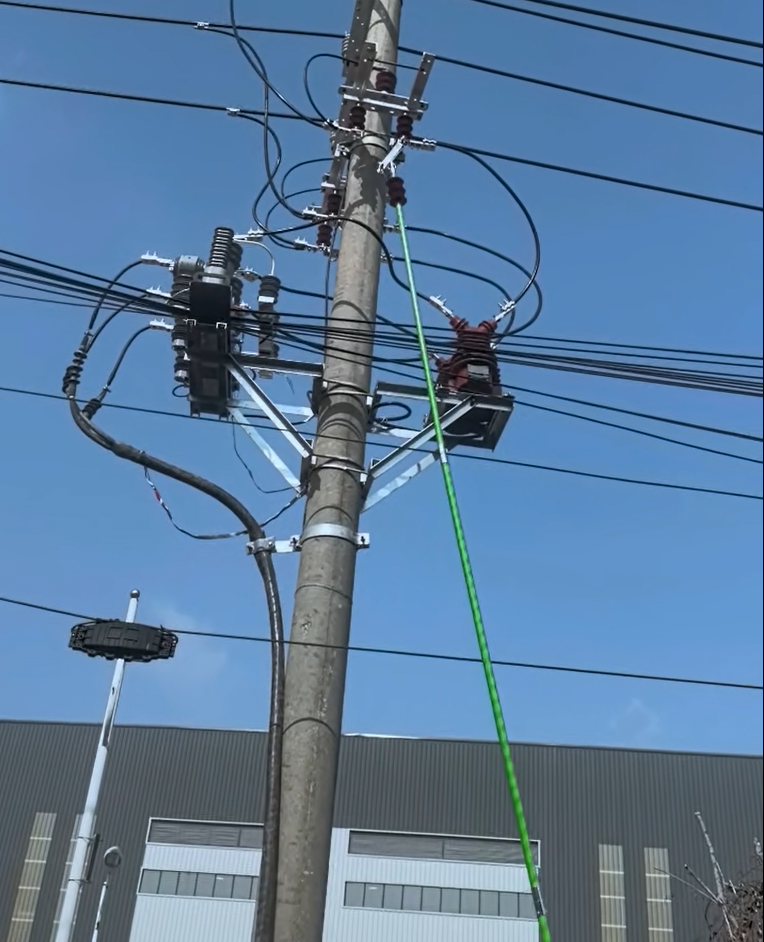
Electricity consumers today expect continuous power availability. Even short interruptions can result in:
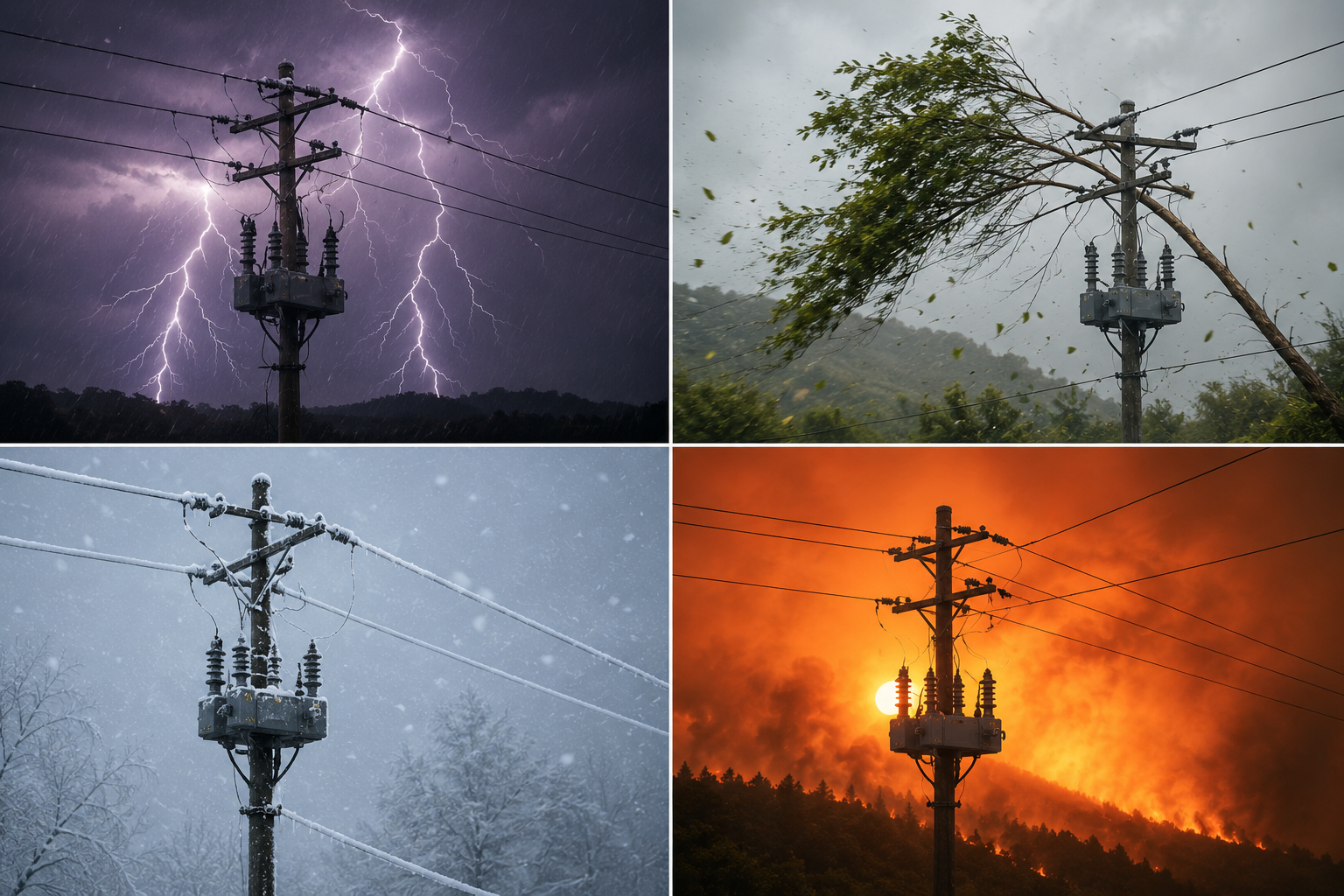
At the same time, distribution networks are exposed to numerous external factors that can trigger faults, including:
Many of these disturbances are temporary faults, meaning they disappear within seconds once the affected conductor is de-energized.
Without automatic restoration equipment, every fault would require manual intervention, causing unnecessary outages and increased operational expenses.
This is where pole mounted reclosers play a critical role.
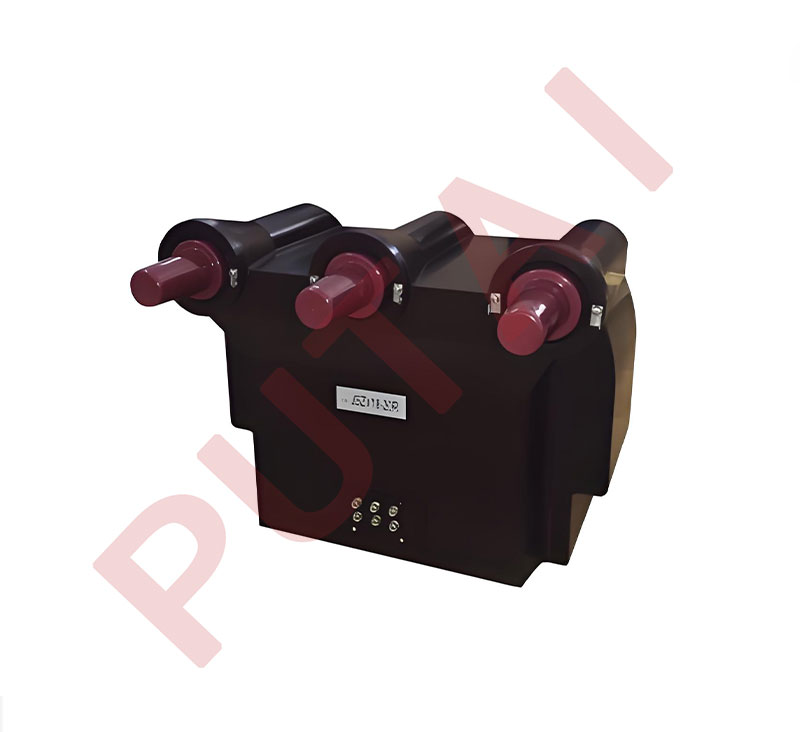
A Pole Mounted Recloser is an automatic medium-voltage circuit protection device installed on overhead distribution feeders.
Its primary function is to:
Unlike conventional circuit breakers that may require manual restoration, a recloser can automatically determine whether a fault is temporary or permanent.
This capability significantly improves power system reliability.
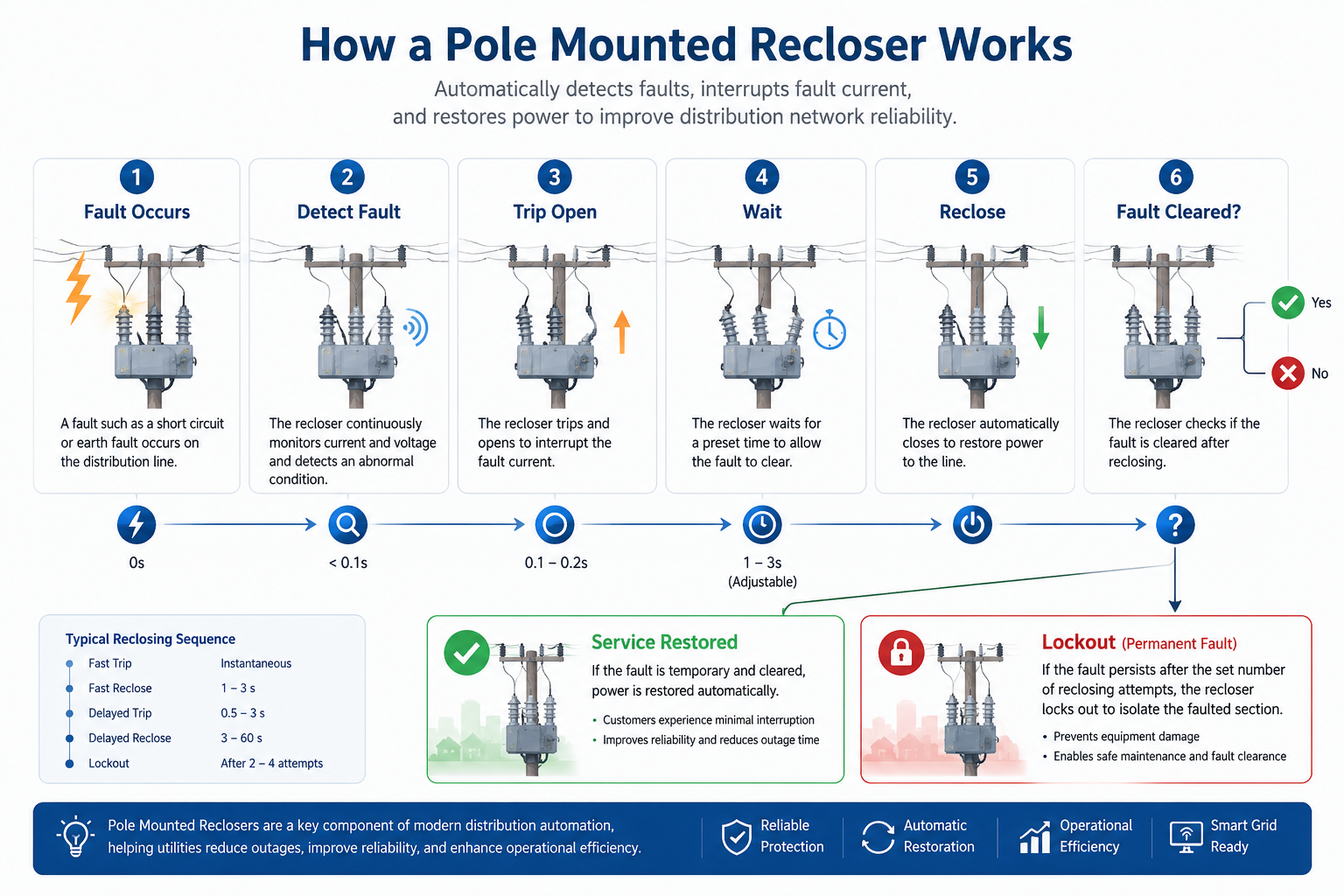
The operating sequence is relatively straightforward but highly effective.
Step 1: Fault Detection
The recloser continuously monitors line current and voltage.
When a fault such as a short circuit or earth fault occurs, protection algorithms identify abnormal conditions almost instantly.
Step 2: Trip Operation
The vacuum interrupter opens and interrupts the fault current.
The affected section becomes de-energized.
Step 3: Automatic Reclosing
After a preset delay, the recloser automatically closes again.
If the fault was temporary, power is restored immediately.
Step 4: Multiple Reclosing Attempts
Most modern reclosers perform multiple reclosing attempts.
Typical sequence:
Step 5: Permanent Fault Isolation
If the fault remains after several attempts, the recloser locks out and isolates the faulted section.
This prevents repeated disturbances and protects equipment from damage.
Studies conducted by utilities worldwide have shown that a large percentage of distribution network faults are temporary in nature.
Examples include:
These events often clear naturally within a few seconds.
Without a recloser:
With a pole mounted recloser:
This single capability is one of the primary reasons reclosers have become standard equipment in modern distribution systems.
Reliability is one of the most important performance indicators for utilities.
Pole mounted reclosers help improve:
Service continuity
Network stability
Customer satisfaction
By automatically restoring service after temporary faults, they significantly reduce the number of sustained interruptions experienced by customers.
2. Reduction of SAIDI and SAIFI
Utilities around the world monitor performance using reliability indices such as:
SAIDI
(System Average Interruption Duration Index)
SAIFI
(System Average Interruption Frequency Index)
Frequent outages negatively impact both indicators.
Pole mounted reclosers help utilities:
This is particularly important for utilities operating under performance-based regulations.
3. Faster Fault Isolation
Modern reclosers can identify faulted sections and isolate them quickly.
Instead of disconnecting an entire feeder, utilities can:
This selective protection strategy significantly improves network resilience.
4. Reduced Maintenance Costs
Manual fault restoration is expensive.
Utilities must often:
Pole mounted reclosers automate much of this process.
Benefits include:
5. Enhanced Personnel Safety
Remote switching capability minimizes the need for field personnel to perform manual switching operations under hazardous conditions.
This is particularly valuable during:
Improved automation directly contributes to safer utility operations.
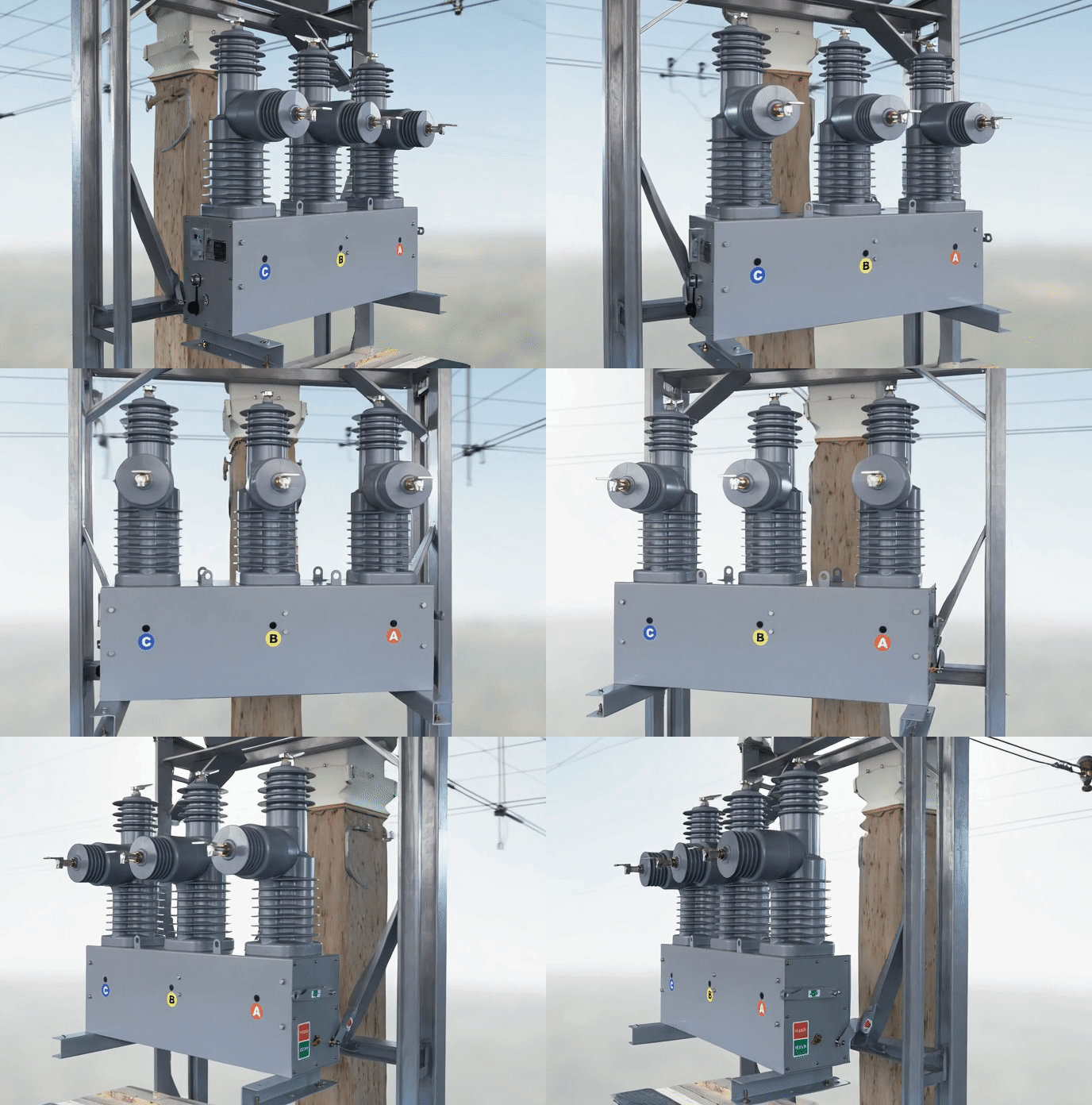
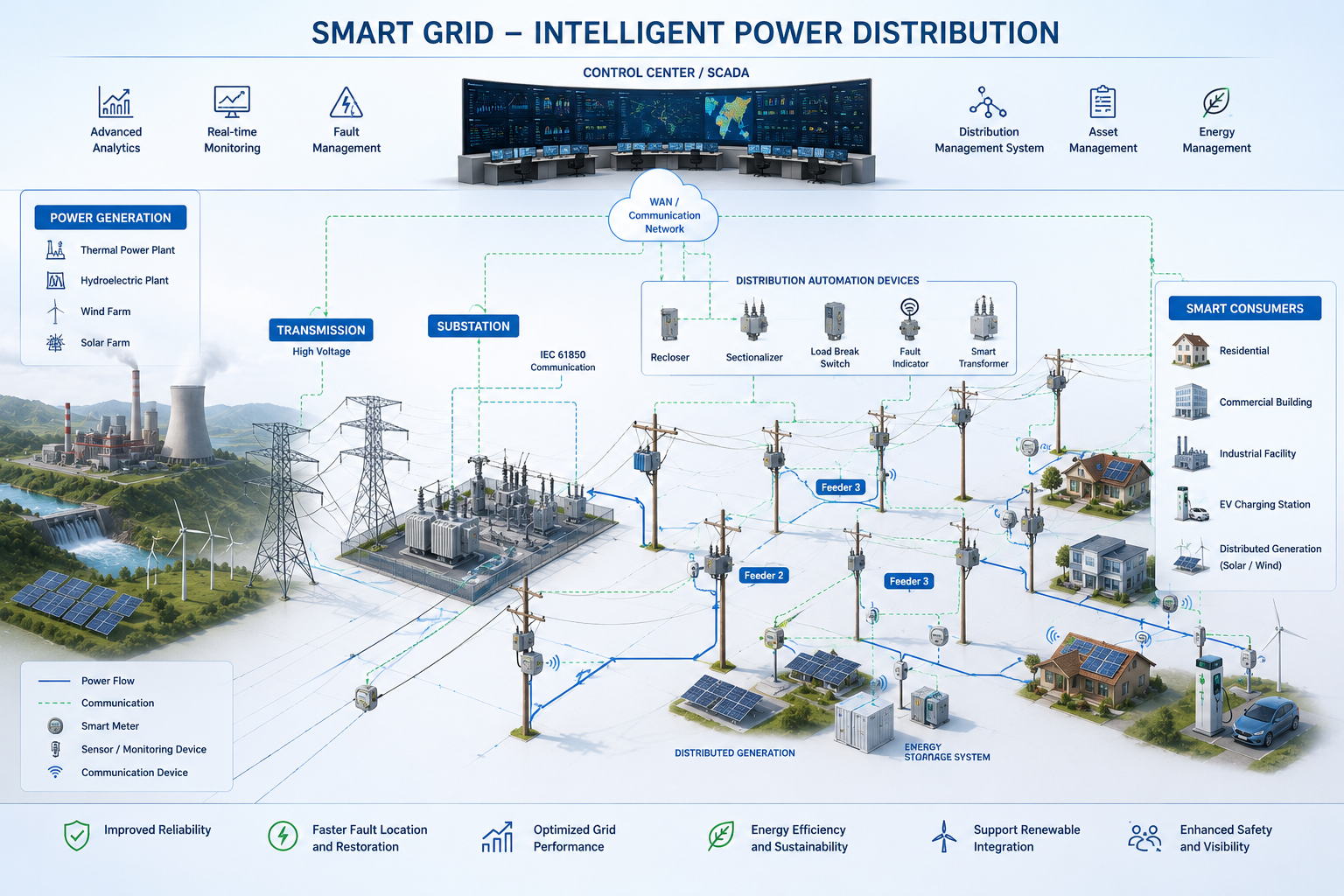
Modern distribution systems are rapidly evolving toward smart grid architectures.
Today's advanced reclosers are no longer simple protection devices.
They function as intelligent field automation nodes capable of:
By connecting reclosers to utility communication networks, operators gain real-time visibility into feeder conditions.
This enables faster decision-making and more efficient network management.
Modern pole mounted reclosers can support communication protocols such as:
Through integration with SCADA systems, utilities can:
These capabilities form the foundation of Distribution Automation (DA) initiatives worldwide.
The increasing penetration of renewable energy sources presents new challenges for distribution networks.
Examples include: Solar farms / Wind power installations / Distributed generation systems
Power flows are becoming more dynamic and less predictable.
Pole mounted reclosers help utilities maintain:
As renewable penetration increases, intelligent protection devices become increasingly important.
Most modern pole mounted reclosers utilize vacuum interruption technology.
Advantages include:
High Reliability
Vacuum interrupters provide stable performance over thousands of operations.
Minimal Maintenance
Compared with oil or SF₆ technologies, vacuum interrupters require significantly less maintenance.
Environmental Benefits
Vacuum technology eliminates concerns associated with greenhouse gas emissions from SF₆ gas equipment.
Long Service Life
Modern vacuum interrupters can operate reliably for decades under normal service conditions.
These advantages have made vacuum reclosers the preferred solution for utilities worldwide.
Pole mounted reclosers are widely used in:
Rural Distribution Feeders
Long overhead lines are particularly susceptible to temporary faults.
Urban Distribution Networks
Reclosers improve reliability and reduce customer interruptions.
Industrial Power Distribution
Critical facilities require fast restoration following transient disturbances.
Renewable Energy Interconnections
Reclosers help protect distributed generation assets and maintain grid stability.
Utility Distribution Automation Projects
They serve as key intelligent switching devices within smart grid programs.
The next generation of reclosers will become even more intelligent.
Emerging trends include:
As utilities continue investing in grid modernization, pole mounted reclosers will remain one of the most important field devices supporting reliable, resilient, and automated power distribution.
In today's distribution networks, reliability is no longer optional—it is a fundamental requirement.
Pole mounted reclosers provide a highly effective solution for reducing outage durations, isolating faults, improving operational efficiency, and supporting smart grid development.
By combining automatic fault interruption, intelligent control, remote communication, and advanced protection capabilities, modern reclosers have become an essential component of medium-voltage distribution systems worldwide.
For utilities seeking to improve reliability, reduce maintenance costs, and prepare for the future of grid automation, investing in intelligent pole mounted reclosers is not simply an upgrade—it is a strategic necessity.

 English
 Pусский
 Español