
In medium-voltage switchgear, the reliable operation of the earthing switch is fundamental to personnel safety during maintenance. The service life of a switch like the JN22B-40.5 Indoor High Voltage Earthing Switch is not predetermined but is significantly influenced by several controllable factors, ranging from its initial selection to daily operation and maintenance.
First and foremost, environmental compliance is the foundational factor. Installing and operating the switch within its rated specifications—specifically at an ambient temperature between -10°C and +40°C, at altitudes not exceeding 1000m, and in conditions with controlled humidity—is crucial. Exceeding these limits accelerates the aging of insulation materials and can induce mechanical stress or corrosion, directly shortening the equipment's operational lifespan.
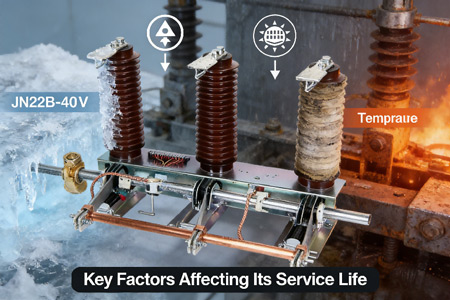
The second critical factor is operational practice and preventive maintenance. Adherence to correct operating procedures minimizes unnecessary mechanical stress. A disciplined maintenance regimen is essential: regularly cleaning insulators, inspecting for overheating at electrical connections, checking for loose hardware, and applying specialized lubricant to moving parts. These actions prevent minor issues from escalating into major failures, thereby preserving the switch's mechanical life, a key parameter to inquire about during procurement.
Finally, scientific selection and sizing during the procurement phase have a long-term impact. Ensuring the switch's rated parameters, such as short-time withstand current and making current, match or exceed your system's requirements is non-negotiable. For applications in non-standard environments, consulting with the manufacturer for a customized solution is imperative. Putai also supports customization and the supply of related medium-voltage accessories to meet system integration needs. By focusing on these key factors, you can maximize the safety and longevity of your earthing switch installation.
(Article content references network resources.)

 English
 Pусский
 Español