
In the complex world of electrical power distribution, medium voltage circuit breakers serve as critical guardians of system integrity. These essential switching devices protect valuable equipment and ensure personnel safety across a wide range of applications, from industrial facilities to utility substations. But with multiple technologies available—each with distinct advantages and considerations—understanding the landscape of medium voltage circuit breaker types is essential for making informed decisions.
This comprehensive guide explores the four primary types of medium voltage circuit breakers, the international standards governing their design and testing, leading manufacturers in the industry, and factors to consider when selecting the right solution for your specific needs.
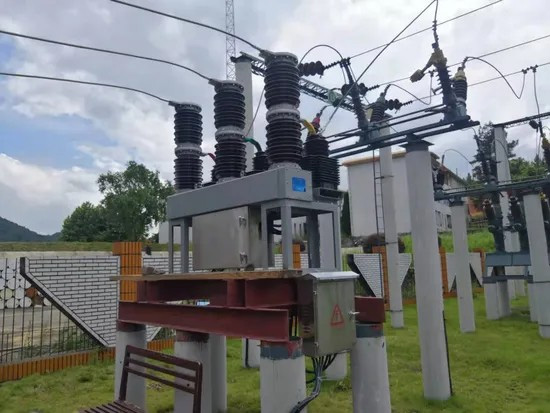
Medium voltage circuit breakers are protective devices designed to operate in systems typically ranging from 600V to 38kV . These sophisticated devices can be operated both manually and electrically, offering flexibility for various applications. Unlike low voltage breakers that rely on thermal-magnetic trip units, medium voltage breakers typically work with protective relays mounted separately in switchgear assemblies.
The circuit breaker operating mechanism is central to the device‘s function—the mechanical system that opens and closes contacts rapidly when needed. Whether spring-operated, solenoid-driven, or magnetically actuated, these mechanisms ensure reliable performance during both normal switching and fault conditions.
Understanding the standards that govern medium voltage circuit breakers is crucial for proper specification and selection. Two primary standard families dominate the industry globally :
The IEEE C37 series provides comprehensive specifications for circuit breakers and switchgear in North American applications. Key standards include:
IEEE C37.04: Rating structure for AC high-voltage circuit breakers
IEEE C37.06: Preferred ratings and related required capabilities for AC high-voltage circuit breakers
IEEE C37.09: Test procedures for AC high-voltage circuit breakers
IEEE C37.20.2: Metal-clad switchgear (5 kV to 38 kV)
IEEE C37.20.7: Arc-resistant switchgear testing
IEEE C37.74: Pad-mounted and vault/subsurface switchgear
The IEC 62271 series is the international standard for high-voltage switchgear and controlgear:
IEC 62271-100: AC circuit-breakers
IEC 62271-200: AC metal-enclosed switchgear and controlgear for rated voltages above 1 kV and up to 52 kV
| Parameter | IEC 62271-100 | IEEE C37 |
|---|---|---|
| Voltage Classes | 3.6, 4.76, 7.2, 8.25, 12, 15, 17.5, 24, 27, 36, 38 kV | 4.76, 8.25, 15, 27, 38 kV |
| Frequency | 16 2/3, 25, 50, 60 Hz | 50, 60 Hz |
| Nominal Current | R10 series (630, 800, 1000, 1250, 1600, 2000, 2500, 3150, 4000 A) | 1200, 2000, 3000 A |
| Short-time Duration | 1 second | 2 seconds |
| Mechanical Operation | M1=2000 operations, Option M2=10,000 | 1500 to 10,000 operations |
Source:
ANSI/IEEE C37.20.7 defines arc-resistant switchgear accessibility levels :
Type 1: Protection only in front of the equipment
Type 2: Protection around the entire perimeter
Type 2B: Type 2 protection even with instrument/control compartment doors open
Type 2C: Protection between adjacent compartments plus full perimeter protection
Leading manufacturers like ABB offer arc-resistant Type 2B enclosures tested to IEEE C37.20.7–2017 as an option for their R-MAG circuit breaker series .
The global medium voltage circuit breaker market is projected to reach USD 4.62 billion by 2030, growing at a CAGR of 5.7% . Key players dominating this market include:
| Company | Headquarters | Notable Offerings |
|---|---|---|
| ABB | Switzerland | R-MAG magnetically actuated breakers, GIS, VCBs |
| Schneider Electric | France | Digital switchgear, eco-efficient designs |
| Siemens | Germany | Integrated medium-voltage protection systems |
| Eaton | Ireland | VCP-W series, digital switchgear, vacuum-insulated designs |
| Mitsubishi Electric | Japan | MV circuit breakers and switchgear |
Sources:
Eaton has expanded its presence in Asia through strategic acquisitions and manufacturing expansion in India . Schneider Electric continues to innovate with advanced digital capabilities and eco-efficient designs, improving reliability and sustainability of electrical infrastructure .
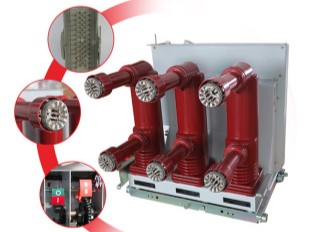
The medium voltage vacuum circuit breaker has become arguably the most popular choice in modern electrical systems—and for good reason. In these devices, contacts are sealed within a ceramic vacuum bottle or interrupter, where the absence of air makes it nearly impossible for an arc to sustain.
Key Advantages:
Compact Design: Vacuum interrupters allow for much smaller breaker frames
Low Maintenance: The sealed vacuum bottle prevents contact contamination from atmospheric conditions
Long Service Life: Minimal contact erosion because arcing is controlled within the vacuum environment
Quiet Operation: Arcing occurs within the sealed vacuum bottle, ensuring very low noise levels
Environmental Friendliness: Unlike SF6 gas circuit breakers, vacuum technology does not use greenhouse gases
Manufacturer Example: ABB‘s R-MAG outdoor circuit breaker uses magnetic actuation with fewer moving parts, designed and tested to IEEE C37.04, C37.06, C37.09, and IEC 62271-100. It offers 15.5/27/38 kV voltage classes, up to 3,700 A, and up to 40 kA interruption levels .
.jpg)
SF6 gas circuit breakers utilize sulfur hexafluoride gas as both an insulating and arc-quenching medium. The arc generated during contact separation is extinguished within a chamber filled with pressurized SF6.
Key Advantages:
High Dielectric Strength: SF6 gas provides superior insulation properties
Reliable Operation: Even if the gas bottle loses pressure, residual SF6 typically allows safe opening
Efficient Arc Quenching: The gas captures arc energy effectively
Environmental Considerations: SF6 is a potent greenhouse gas, making leakage prevention a critical concern. Modern designs incorporate technology to minimize or eliminate SF6 emissions.
Standards Compliance: For applications like the C2-M2 class (capacitor switching and high mechanical endurance) per IEC 62271-100, circuit breakers must meet rigorous duty requirements including specified operating sequences and total break time limits .
Air circuit breakers represent traditional technology where contacts open in air, using arc characteristics and magnetic fields to extinguish the arc. The arc is transferred to splitter plates, forming short series arcs that are stretched and cooled until extinction.
Characteristics:
Lower initial cost
Longer proven service life
Operating mechanisms surrounded by ambient air
Cooling achieved through natural convection
While widely used in industrial environments, air circuit breakers are gradually being replaced by vacuum and SF6 technologies in many new installations due to maintenance and space considerations.
Oil circuit breakers house all assemblies within an oil-filled tank providing both insulation and arc-quenching capabilities. The oil absorbs arc energy and cools the contacts during interruption.
Current Status: Oil circuit breakers have become significantly less common in modern industrial environments. Vacuum circuit breakers have largely replaced them due to maintenance costs, environmental concerns, fire safety issues, and larger footprint requirements.
Understanding the circuit breaker operating mechanism helps explain why these devices perform so reliably. Most modern medium voltage breakers use spring-operated mechanisms that can be charged either manually or via a small motor.
The typical sequence:
Charging: Springs are compressed (stored energy)
Closing: Release of stored energy snaps contacts closed quickly
Tripping: On fault detection, the latch mechanism releases, allowing springs to snap contacts open
This stored-energy design ensures consistent speed regardless of how quickly an operator moves the handle—crucial for effective fault interruption.
Advanced Mechanisms: ABB‘s magnetically actuated R-MAG breaker uses fewer moving parts and requires less maintenance than traditional spring mechanisms, with over 20 years of field testing in more than 50,000 installations across 10+ countries .
| Factor | Vacuum VCB | SF6 GCB | Air ACB | Oil OCB |
|---|---|---|---|---|
| Maintenance | Very low | Moderate | Moderate | High |
| Environmental Impact | Excellent | Greenhouse gas concern | Good | Oil leak risk |
| Footprint | Compact | Medium | Large | Very large |
| Noise Level | Very quiet | Moderate | Moderate | Quiet |
| Cost | Medium-high | Medium-high | Low-medium | Low-medium |
| Standards | IEEE C37, IEC 62271 | IEEE C37, IEC 62271 | IEEE C37 | IEEE C37 |
Voltage Rating: Match the breaker‘s maximum voltage rating to your system. For example, 15 kV switchgear can be applied at 12.47 kV, 13.2 kV, 13.8 kV, or 14.4 kV .
Environmental Conditions: Compact switchgear using sealed circuit breakers is ideal for confined spaces or areas with low accessibility .
Arc Resistance Requirements: Assess whether Type 1, Type 2, Type 2B, or Type 2C arc-resistant ratings are needed for personnel safety .
Operating Duty: Consider required operating sequences (e.g., O-3m-CO-3m-CO for IEEE or O-15s-CO-3m-CO for IEC) .
Seismic Qualification: For installations in seismic zones, verify breakers meet IEEE Std. 693-2018 qualifications .
Medium voltage circuit breakers serve critical roles in:
Power Generation Plants: Protecting generators and transformers
Distribution Substations: Managing power flow across networks
Commercial and Industrial Buildings: Ensuring safe power distribution
Data Centers: Providing reliable protection for sensitive equipment
Airports, Nuclear Plants, Refineries: Demanding high reliability in critical infrastructure
Q1: What is a medium voltage vacuum circuit breaker and why is it popular?
A medium voltage vacuum circuit breaker is a protective device that interrupts current within a sealed vacuum bottle, preventing arc formation. It‘s popular due to its compact size, low maintenance, and long service life. The vacuum environment eliminates contact oxidation and ensures quiet, reliable operation. Manufacturers like ABB offer magnetically actuated VCBs designed to IEEE C37.04, C37.06, C37.09, and IEC 62271-100 standards .
Q2: What are the key differences between IEEE and IEC standards for medium voltage circuit breakers?
IEEE standards (C37 series) are primarily used in North America, while IEC standards (62271 series) are used globally. Key differences include voltage class listings, short-time duration (1s for IEC vs 2s for IEEE), and operating duty sequences. For example, IEEE specifies O-15s-CO-3m-CO as the basic operating duty, while IEC specifies O-3m-CO-3m-CO . Arc-resistant testing is defined by IEEE C37.20.7 .
Q3: What does the circuit breaker operating mechanism do and what types exist?
The circuit breaker operating mechanism is the mechanical system that opens and closes the breaker contacts. Traditional designs use spring-operated mechanisms charged manually or by motor. Advanced designs like ABB‘s R-MAG use magnetic actuation, which has fewer moving parts and requires less maintenance than conventional spring mechanisms . The mechanism ensures rapid, consistent operation during both normal switching and fault conditions.

 English
 Pусский
 Español