
The LW38-40.5kV Outdoor SF6 Circuit Breaker is designed for seamless integration into utility substations and industrial power distribution systems. Proper installation and protection configuration are essential to realize its full potential. This guide provides best practices for engineers and technicians responsible for LW38 deployment in transmission and distribution networks.
Site preparation must account for the breaker's physical requirements. The LW38 requires a level mounting foundation capable of supporting 800-1000kg (depending on CT configuration). For installations in seismic zones, the foundation must meet magnitude 8 withstand requirements (horizontal acceleration 0.25g, vertical acceleration 0.125g) . Allow sufficient clearance for operation and maintenance, including access for SF6 gas handling equipment. For plain-type installations (≤1000m altitude), standard insulation applies; for plateau-type installations (up to 3000m), specify the high-altitude configuration.
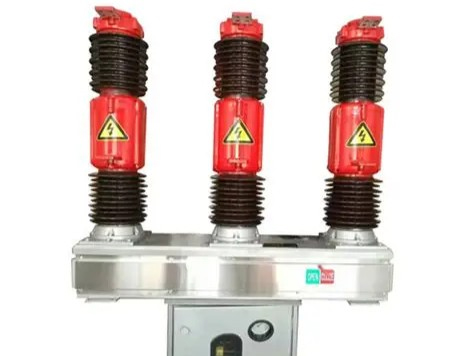
Primary connections must accommodate the breaker's 1600A or 3150A rated current . Use appropriate conductor sizing and terminal hardware to prevent overheating. The breaker's rated short-time withstand current of 31.5kA for 4 seconds ensures coordination with upstream and downstream protection. For capacitor bank applications, verify that the rated capacitor bank breaking current of 400A matches the installation's requirements. The rated out-of-phase breaking current of 6.3/7.9kA should be considered for generator or asynchronous grid connection applications.
Protection configuration should leverage the breaker's fast operating characteristics. With opening time ≤0.06s and closing time ≤0.1s, the LW38 can be integrated into high-speed protection schemes. The rated operating sequence O-0.3s-CO-180s-CO supports auto-reclosing applications for overhead line protection. For SCADA integration, ensure communication interfaces are properly configured to report breaker status, SF6 pressure alarms, and operational counts. The metal shorting time ≥0.12s provides adequate margin for protection coordination.
Commissioning verification steps include:
1.Confirm SF6 gas pressure at 0.45 MPa (adjust for ambient temperature).
2.Perform manual and electrical open/close operations to verify mechanism function.
3.Conduct power frequency withstand tests to confirm insulation integrity.
4.Verify protection relay settings and communication with control system.
5.Document all operational parameters and gas pressure readings for baseline.
Therefore, following these installation and configuration guidelines ensures the LW38 delivers reliable, long-term protection for your transmission or distribution network. Putai also supports customization and the supply of related medium-voltage accessories to meet system integration needs. For technical support on LW38 installation or protection configuration, contact our engineering team.
(Article content references network resources.)

 English
 Pусский
 Español